Tuesday, 11 December 2018

Portraiture

Portraiture

Portraiture is the artistic representation if a person and to display emotions and feelings . The main focus of a portrait is to portray a person in a specific way with hints to their characteristics, mood and likeness.


This image i believe fits the term portrait as it captures a sense of frustration and maybe anger that this young tribal child may have with intense detail and focus


This portrait of Sir Winston Churchill was taken by Yousuf Karsh in a mid war effort to boost the countries moral and drive to help increase the war effort.
this portrait give the sense of an ominous strong force who is at the head of our country.  his posture is upright indicating strong stability with his cane adding to that stature.


Man Ray (1890-1976) was an American visual artist who spent most of his career in France. He was a significant contributor to the dada and surrealist movements, although his ties to each were informal. He produced major works in a variety of media but considered himself a painter above all. He was best known for his photography, and he was a renowned fashion and portrait photographer. Man Ray is also noted for his work with photograms, which he called "rayographs" in reference to himself.

His work is the ideal standard for the combination of both creativity and technicality in distortion and surrealism photography. Because of this, I will aim to create a similar standard of creativity and professionalism in my work. 

AO1: Develop ideas through sustained and focused investigations informed by contextual and other sources, demonstrating analytical and critical understanding.


Contact sheet:
Best images 

Series: "Who am I"


Series: "A cup full"


Series: "The same mood"

AO2Explore and select appropriate resources, media, materials, techniques and processes, reviewing and refining ideas as work develops.
Camera settings

the camera for "Who am I" and "A cup full" 

AO3: Record ideas, observations and insights relevant to intentions, reflecting critically on work and progress.
Ideas and interpretations:

Series: "Who am I"

 My own interpretation of this series was that you don't know the true identity of the person behind the image. The use of glassware in terms of the distortion of identity as a result of brands ideologies and modern fashion communities.  The denotation of a distorted faces leads to the connotation tat when people use these aftershaves and branded objects, it hides their true identity and distorts persons true personality.  In each image there is one or more things changes by using the position of the aftershave bottle to manipulate the shapes and angles present within the image. This leads to how brands change our identities to feeling like we are perfect with our imperfections like the modes we see endorsing them.


Series: "A cup full" 

This series was inspired by the glass images that Man Ray had taken. I have used a glass to again distorted the image but this time with the glass in full view with the action of light and how that changes the perspective of the focus and technicality of the image.  With this series i deiced to use the science of photography and incorporate that into a portrait series.  instead of having interpretive connotations this series was purely about the technical applications of reflects on bodily distortion.

Series: "The same mood"
Personal comment:
 this image was created based on the work of Thomas Ruff and how he use expressionless faces to create a cold and mundane impression to the viewing audience


AO4: Present a personal and meaningful response that realises intentions and, where appropriate, makes connections between visual and other elements.

These are my best images.


Thursday, 6 December 2018

Documentary

Documentary photography


Documentary photography usually refers to a popular form of photography used to chronicle events or environments both significant and relevant to history and historical events as well as everyday life.

The decisive moment is a concept made popular by the street photographer, photojournalist, and Magnum co-founder Henri Cartier-Bresson. The decisive moment refers to capturing an event that is ephemeral and spontaneous, where the image represents the essence of the event itself.  He was an advocate for documentary photography and capturing things in the moments as well as having a great interest of the surrealism movement of art and photography.

the images of documentary photography below all the technique of decisive movement to capture particular snapshots of a scene, with this different inferences and connotations can be made depending on the point of image capture in other words if its not in the right moment the meaning and message behind the image may be completely different to that of the intended.


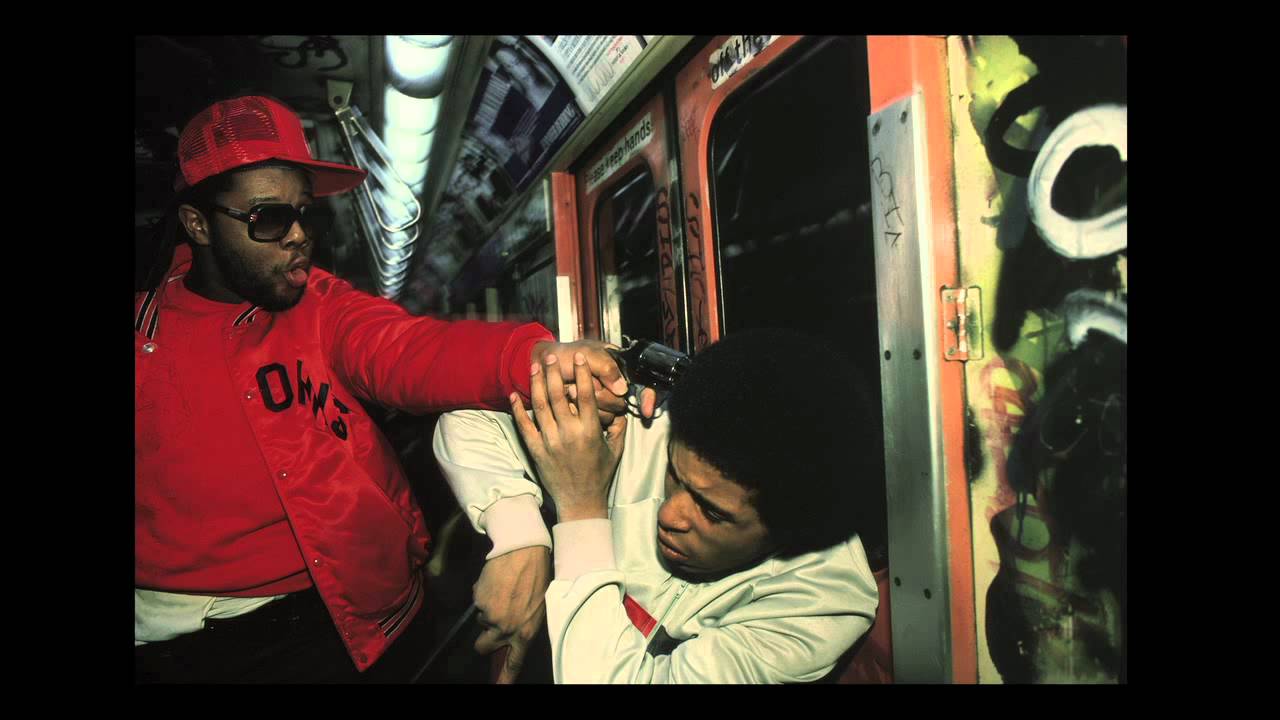
Bruce Davidson 

Bruce Davidson began taking photographs at the age of ten in Oak Park, Illinois. While attending Rochester Institute of Technology and Yale University, he continued to further his knowledge and develop his passion. He was later drafted into the army and stationed near Paris. There he met Henri Cartier-Bresson, one of the founders of the Magnum Photos.


Image result for bruce davidson tube


This image above is from his famous subway series. This denotes a man holding a gun to another mans head.  The man in


Image result for bruce davidson tube


Series of Documentary images, "My Daily Journey" .


Tuesday, 13 November 2018

Landscapes

Landscapes

Landscape photography shows spaces within the world, sometimes vast and unending, but other times microscopic. Landscape photographs typically capture the presence of nature but can also focus on man-made features or disturbances of landscapes.


Depth of field is every important in the art of photography as it allows the artist to convey a large range of space and emotions. Landscape Depth. A photograph is a two-dimensional object. To create depth, a photographer must portray an illusion that the viewer can walk into the image, see objects on multiple planes or feel as if he or she can reach into the picture to grab a com-positional component.

the depth of field is the amount of a photo in focus, wide being f/22 ad low is f/1.4 to 5.

A wide angle lens along with a lowered f stop at f/16-f/22 is recommended to give this effect.


To create the sense of realism in landscape photography, the image must be very sharp. to achieve this a tripod is and essential to take a stable image with unmatched clarity. Additionally the use if filters is recommended as they can help to give various feel s and increases the contrasts between the wavelengths of life the camera absorbs.  


The zone system model indicates the ranges of tone from deep black to bright white. by using this system model a photographer can clearly compose his\her image to give the full effect of their visualisation.


Research:


Ansel Adams


Adams uses the zone system to give a sense of impressiveness and surrealism to the landscape. By using filters he can alter the contrast and deepness of the greyscale. He exposes the image in a certain way so that the sun rays can come through and give an angelic feel to the image. 

by using a large format camera he is able to create a larger depth of field in order to  give a a spacious walkthrough feel to the image, aiding to the realism of this photo. 


By using a high f/stop of 64 and a longer shutter speed so that the exposure is correct. Adams can get a large amount of detail without overexposing the image. this images connote to the power of god ad his/her creations. These images show the vastness of the natural world.


Image Bank:


Contact Sheet


AO1: Develop ideas through sustained and focused investigations informed by contextual and other sources, demonstrating analytical and critical understanding.


These are the images i have taken for my landscape shoot and show landscape photography techniques and features that I learnt via the research of Ansel Adams. 
as my shoot progressed i became to alter my cameras internal settings to progressive alter the tones of blue and purple which allowed me to achieve a greater tonal range in my grey scale when taking various images such as the one directly left of this passage.


AO2 Explore and select appropriate resources, media, materials, techniques and processes, reviewing and refining ideas as work develops.

The images above have all been edited using Photoshop,
via the layer curves dodging and burning technique. the images have also been altered using the levels tool however I could've used a tripod and stabiliser to ensure that the image is clear and sharp.
As a result of previously assessing my work i used yellow and red filters in this shoot to allow the darkness and highlights of natural colours tone accentuated.
Internal colour perimeters of the camera were also changed to favour darkness of blues and purples to give an eerie ominous interpretation of the sky in a few of the images, however next time this can be developed further by the use of a neutral density filter to create a long exposure landscape that shows the action of light as well as tonal range in a different and experimentation interpretive way..
Although I used a tripod next time if I use a remote trigger that would help reduce camera shake when taking images on slower shutter speeds.
as the shoot progressed i begun to understand the rules of framing and image composition which I will improve on by researching traditional and modern types of composition. In the future this will allow me to use a more original and artistic  presenting my images along with a less homogeneous feel making my images less regular and normal and further more interesting.


AO3: Record ideas, observations and insights relevant to intentions, reflecting critically on work and progress.

The focus on this shoot was to create a set of images that where as beautiful as they are ghostly, to create a sense of eeriness. the primary research I conducted aided me with techniques and an insight on how to do so and I feel I have achieve my aims with the following set of images bellow.


AO4: Present a personal and meaningful response that realises intentions and, where appropriate, makes connections between visual and other elements.


BEST IMAGES


                ↓


Monday, 5 November 2018

Movement

Movement:


Definitions and theory:


Definition:
Motion blur is the apparent streaking of rapidly moving objects in a still image or a sequence of images such as a movie or animation. It results when the image being recorded changes during the recording of a single exposure, either due to rapid movement or long exposure.

Research:
J Henri Lartigue
 Jacques-Henri Lartigue (1894-1986) was a French photographer and painter noted for the spontaneous, joyful photographs he took beginning in his boyhood and continuing throughout his life. Lartigue’s boyhood photographs were almost always candid images taken of his family and friends.. Lartigue studied painting at the Académie Julian in Paris from 1915 to 1916 and would always consider himself a painter first and foremost. It was nevertheless as a photographer that he would establish his reputation. In the 1910s and 1920s Lartigue enthusiastically photographed such subjects as automobile races, fashionable ladies at the seashore and the park, and kite flying. These photographs, with their informal approach to everyday subjects, reveal his free spirit and love of life, rather than a concern for photographic technique and craft, and often capture a sense of movement.


He focused on movement in a freeze frame style with him capturing images with higher sitter speeds in black and white, creating images that looked surreal and make believe. In this time period photography in such a surreal fashion was not prominent however the style of freeze frame and manipulating movement was made popular by Jacques in the late 1960s.
His images connote to surrealism image which only god or a higher power has to do such `s stopping the sea like moses therefore biblical connotations could be present
Image bank:


 (AO:1.  You must ensure that several of the visual ideas/inspirations within the image bank are pursued. )

AO1: Develop ideas through sustained and focused investigations informed by contextual and other sources, demonstrating analytical and critical understanding.


My images:

Series 1: "Blurred lines"


Series 2: "Rush hour"


AO3: Record ideas, observations and insights relevant to intentions, reflecting critically on work and progress.

Series 1: "Blurred lines"

This series was taken behind my house on the a406. I used 3 different shutter speeds to get the 3 desired images in this series. My ideas where to create a progression of images that relate to movement simply by the streaking lights made by moving cars. additionally it connotes to the fact that still late at night the world is still working and moving in quiet a fast pace whilst others sleep and are "stationary". As well as this the images have an almost ghostly feel, which gives the impression of the absence of humanity due to no humanoid figures being the subject of these images.
the exposure on a few of the images 1/3 could've been more calculated to create and overall greater amount contrast to give that ominous effect. Moreover the se of a remote trigger for the shutter would also be a good improvement as in the first image lens movement can be seen whilst using the bulb setting.

Series 2: "Rush hour"

Rush hour was taken in piccadilly circus on a late night out of street photography. My initial thoughts where to use the movement of people and vehicles to create surreal images which are composed of both moving an still objects. I attempted to use the mix of traffic to be a central focus creating a stream of led lights with my shutter speed. this made it able to achieve this unrealistic and unnatural image. The first 2 images follow that style. The third image in the series although overexposed due to the large billboard screens, i feel has a greater effect in comparison to the others. It showcases the movement of people as well as captures the difference in movement from the various subjects.  we can see that the people are not as blurred compared to the cars. This connotes to the eerie feel of transcendence, the light of the cars creating a golden halo with the people frozen in awe. 
Again these images can al be improved major in one way. by using a light metre next time i would be able to calculate the correct f top and shutter speed that will allow these complex images to be the right level of exposure and still by achieving the movement aspect we are focusing on.


AO2Explore and select appropriate resources, media, materials, techniques and processes, reviewing and refining ideas as work develops.

Camera settings:

The images in both series were taken on a tripod and either a self timer setting or bulb was used to reduce the effect of human effort (movement) on the lens distorting the captured images. the images have also not been edited as I feel they do not need so.
AO4: Present a personal and meaningful response that realises intentions and, where appropriate, makes connections between visual and other elements